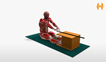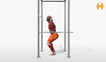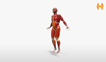
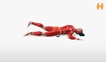
Prone Hip Extension on Bolster — Alternating
The prone hip extension on the bolster is designed to strengthen the hamstrings, glutes and lower back. It is a good exercise for beginners and all you need is a bolster or rolled up towel to do it. Focus on lifting your leg straight back without rocking your body to get the most benefit from the prone hip extension on the bolster exercise.
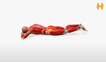
Prone-lying Reverse Hip Extension
The prone-lying reverse hip extension is another way to strengthen your lower back. At the same time you strengthen your glutes and hamstrings. Most activities in life are easier when you have a strong core. The prone-lying reverse hip extension is a good way to strengthen your core and is easy enough for beginning exercisers.
Sit-and-Reach Test
The sit-and-reach tests flexibility in the posterior chain (hamstrings, glutes, lower back). Lower back flexibility is important because tightness in this area is implicated in lumbar lordosis, forward pelvic tilt and lower back pain. The sit-and-reach test can be used to test large groups with little equipment.
Wide-Stance Barbell Parallel Squat
The wide stance barbell parallel (full) squat develops power and strength in the legs and glutes. The full range of motion emphasizes the glutes. The wide stance targets the inner thigh muscles. Warm-up thoroughly before performing full squats.
Wide-Stance Dumbbell Squat
The wide stance dumbbell squat strengthens and defines the legs and inner thighs. The dumbbells reduce loading on the spine and therefore make a good alternative to back squats. Dumbbell squats can be performed at home or in the gym. Include this exercise on your lower-body workout day.
Zigzag Run
The zigzag run is an agility drill. This exercise can be used as a dynamic warm-up or for conditioning purposes. The zigzag run develops hip flexibility, body balance, and increase body awareness. Keep the rest periods brief to burn maximum calories per session.
Standing Long Jump
The standing long jump develops powerful legs and glutes. This exercise can be used to condition the entire body. Combine the standing long jump with back squats to develop explosive strength in the lower body. When repeated for many reps, the standing long jump develops full-body fitness.
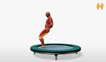
Trampoline Clock Drill
The trampoline clock drill increases coordination, balance, and body awareness. The trampoline requires additional ankle, knee, and hip stabilization. This exercise can also be used for conditioning the cardiovascular system. If a trampoline is unavailable perform this exercise on the floor.
Tuck Jump
The tuck jump is a plyometric exercise that increases power in the hips, legs, and trunk. The ballistic nature of this exercise requires a strong base level of strength in the legs. It's recommended that beginners do not perform this exercise.
Twisting Side Bend
The twisting side bend stretches the inner thighs, torso, and lat muscles. This is a good stretch to perform following a lower body workout or between sets. Increase the stretch by reaching your arm overhead.
Walking Lunge Rotation
Walking lunges with rotation strengthens the legs, hips and torso. The rotation activates the obliques and challenges your balance. A medicine ball may be used to add resistance to the body and further activate the core muscles.
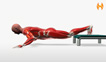
Wide Pushup — Feet Elevated
Push ups with the feet elevated increase the resistance on the chest, shoulders, and triceps. Elevating the feet emphasizes the upper chest. If the hands are elevated, more emphasis is placed on the lower chest.
Wide-Stance Barbell Half-Squat
The wide stance barbell half squat develops power and strength in the legs. The reduced (partial) range of motion allows for greater loads to be used in training. Therefore, additional fast-twitch muscle fibers are recruited. Fast-twitch muscle fibers increase in size (hypertrophy) and add mass to the legs.
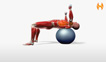
Ball Dumbbell Chest Press
The dumbbell chest press performed on the ball is significantly more challenging than the barbell bench press. The ball forces you to stabilize your body while pressing the dumbbells. You are also using you glutes and hamstrings to maintain proper position on the ball. This exercise requires you to focus your attention on using proper technique which helps you get more out of the exercise.
Bent-legged Deadlifts
Bent-legged deadlifts strengthen the glutes, hamstrings, spinal extensors and core. It's important to push the hips back while lowering your trunck during the bent-legged deadlift. This allows you to maintain proper posture and avoid flexing the back which may lead to low back strain. Be sure to contract your core, glutes, and hamstrings at the top of the movement.
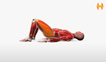
Bridging
The bridge exercise, "bridging" strengthens the glutes and develops core stability. Bridging can be performed anywhere and can be incorporated into your workout as part of your core routine. The basic bridge is an excellent beginner exercise, while the single-leg bridge is ideal for more advanced exercisers. You may also perform the bridge on a Swiss ball or Pilates Reformer machine.
Bridging Single-legged
The basic bridge exercise is made more difficult by lifting one leg in the air while the other is planted firmly on the ground. The single-leg bridge is great for developing glute, and hamstring strength and core stability. To progress the single-leg bridge hold the leg extended for a longer periods of time during each workout. The added time will challenge your muscles to stabilize your body as you move the leg.
Deadlifts
The Deadlift is an awesome total body exercise. It strengthens your upper back, grip and lower back and legs all at the same time. Regular practice of the Deadlift will reinforce the proper way to lift things and build strength necessary to lift everyday objects, like groceries and suitcases. When performing the Deadlift it is important for you to maintain perfect posture and keep the bar close to your body.