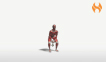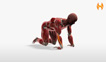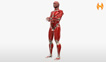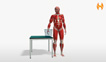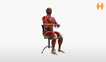

Walking Dumbbell Swing
The Walking Dumbbell Swing is a more complex version of the Dumbbell Swing. The Walking Dumbbell Swing is great for building power and endurance in your hips and posterior chain. It also helps improve coordination and build athleticism.

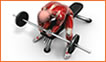
Barbell Suitcase Row
The Barbell Suitcase Row strengthens the back and forearm muscles. Instead of using a bench for rowing, stand. By standing you increase the demand on the entire body, making the exercise “functional”. Include the Barbell Suitcase Row in place of dumbbell rows or bent-over rows.
Dumbbell Swing
The Dumbbell Swing is a great exercise that can be used as a strength exercise or conditioning exercise. It builds power and endurance in the hips and posterior chain. You can do the Dumbbell Swing on its own or as part of a circuit.
PowerBlock Hammer Curl — Seated
The seated PowerBlock hammer curl develops the biceps and forearm muscles. If you're a bodybuilder looking to mix up your biceps workout or just an "average joe" trying to beef up your "guns" seated hammer curls deliver results. The neutral grip alleviates pressure on the wrist and is therefore a good option for anyone with wrist problems.
PowerBlock Hammer Curl — Standing
PowerBlock Standing Hammer Curls build the biceps (brachialis) and forearm (brachioradialius) muscles. Wrist curls, another great forearm exercise, can be performed before hammer curls to pre-fatigue the forearms. After the forearms are pre-fatigued the biceps assist the forearm past their normal limits. The extra assistance help the forearms become stronger. Add standing hammer curls to your workout to build great looking arms.
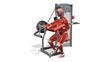
Arm Extension — Machine
The arm extension exercise works the triceps muscles. The triceps work to extend the elbow. The arm extension can be paired with the arm curl machine to work the entire upper arm.
Barbell Wrist Curl
The Barbell Wrist Curl is a good exercise for building grip and forearm strength.
Hammer Curl — Seated
The seated hammer curl develops the biceps and forearm muscles. If you're a bodybuilder looking to mix up your biceps workout or just an "average joe" trying to beef up your "guns" seated hammer curls deliver results. The neutral grip alleviates pressure on the wrist and is therefore a good option for anyone with wrist problems.
Hammer Curl — Standing
Standing hammer curls build the biceps (brachialis) and forearm (brachioradialius) muscles. Wrist curls, another great forearm exercise, can be performed before hammer curls to pre-fatigue the forearms. After the forearms are pre-fatigued the biceps assist the forearm past their normal limits. The extra assistance help the forearms become stronger. Add standing hammer curls to your workout to build great looking arms.
Forearm Extensor Stretch
The forearm extensor stretch is a passive stretch for the muscles on the top of the forearm. This stretch improves flexibility and strength in the brachioradialis. The forearm extensors can become weakened and overused if not properly trained. Sports such as tennis and golf place high demands on the forearm muscles. The forearm extensor stretch should be included as part of the post-game cool down.
Forearm Extensor Stretch — Table
The forearm extensor stretch performed on a table top is a passive stretch for the wrist and forearms. The table provides support surface in which to apply gentle pressure to the wrists. You may add the forearm extensor stretch to your workout, between office work, or after tennis or golf.
Forearm Flexor Stretch
The forearm flexor stretch relaxes the wrist and forearm muscles. The standing stretch can be performed anywhere and should be included in your workout routine. Many common pulling exercises require the forearm muscles to contract and this can lead to tight, overused muscles. The standing forearm flexor stretch is a good way to alleviate tight muscles in the forearm.
Forearm Flexor Stretch — Floor
The forearm flexor stretch performed on the floor targets the forearm flexors (flexor carpi radialus, flexor carpi ulnaris, and the palmaris longus). The floor provides a surface in which to passively stretch the forearm flexors. This is a stretch is commonly recommended for prevention and management of Carpal Tunnel Syndrome (CTS).
Forearm Pronation Stretch
The forearm pronation stretch targets the wrist and the muscles on top of the forearm. It is included in programs for prevention and management of Carpal Tunnel Syndrome (CTS). You can perform this stretch seated or standing. The forearm pronation stretch is recommended after golf and tennis.
Forearm Supination Stretch
The forearm supination stretch targets the wrist and forearm muscles. These muscles are susceptible to repetitive stress injuries and should be stretched often. Focus on gentle rotation of the wrist and hold the stretch for 20-30 seconds. Repeat the forearm supination stretch as recommended, typically twice a day or until return to normal function.
Sand-Bucket Finger Strengthening
The sand bucket finger strengthening exercise is good for hand strength. All you need is a bucket and some sand. If you don't have sand you can use rice or gravel. For those who don't have space or don't want a bucket lying around you can use a stress ball or grippers to get a similar effect.
Seated Double Wrist-Flexor Stretch
The seated double wrist flexor stretch is a good exercise for anyone who types a lot. It helps keep the wrist and fingers flexible. This flexibility is helpful for exercises like the front squat and the power clean. This stretch does not require any equipment and can be done anywhere.
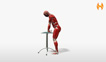
Seated Forearm Extensor Stretch
The seated forearm extensor stretch stretches the muscles of the wrist and forearm. Wrist flexibility is very important in aikido and other activities where the wrist could be bent and injured. The seated forearm extensor stretch can be performed anywhere.