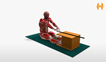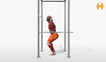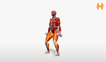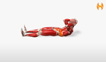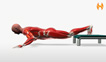
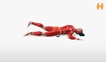
Prone Hip Extension on Bolster — Alternating
The prone hip extension on the bolster is designed to strengthen the hamstrings, glutes and lower back. It is a good exercise for beginners and all you need is a bolster or rolled up towel to do it. Focus on lifting your leg straight back without rocking your body to get the most benefit from the prone hip extension on the bolster exercise.
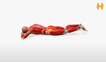
Prone-lying Reverse Hip Extension
The prone-lying reverse hip extension is another way to strengthen your lower back. At the same time you strengthen your glutes and hamstrings. Most activities in life are easier when you have a strong core. The prone-lying reverse hip extension is a good way to strengthen your core and is easy enough for beginning exercisers.
Roll-up
The roll up is a way to stretch and massage your back. Just keep your head tucked and rock back and forth. It is a great exercise for beginners and people with a tight back. It is also a good cool down exercise after a tough workout. The key to the back roll is to keep your body tucked so that you rock smoothly.
Sacral Roll
The sacral roll is a good stretch for your hips and low back. It can be done anywhere since you don't need any equipment. However, all stretching should be done only after a thorough warm up. Hip and back mobility is important for almost all sports and for general health and fitness.
Side Swipe
The side swipe develops hip and trunk mobility. The foam roller provides a self-message to the spine as you rock from side to side. The sideswipe can be performed anytime you feel tight in the back (spine) and hips.
Sit-and-Reach Test
The sit-and-reach tests flexibility in the posterior chain (hamstrings, glutes, lower back). Lower back flexibility is important because tightness in this area is implicated in lumbar lordosis, forward pelvic tilt and lower back pain. The sit-and-reach test can be used to test large groups with little equipment.
Spinal Twist
The spinal twist stretch tones and relaxes the spinal joints and muscles. The spinal twist releases tightness and gently massages the organs. This is a yoga style stretch that will lengthen the hips and tone the trunk. Exhale and maintain an upright torso.
Walking Dumbbell Swing
The Walking Dumbbell Swing is a more complex version of the Dumbbell Swing. The Walking Dumbbell Swing is great for building power and endurance in your hips and posterior chain. It also helps improve coordination and build athleticism.
Wide-Stance Barbell Parallel Squat
The wide stance barbell parallel (full) squat develops power and strength in the legs and glutes. The full range of motion emphasizes the glutes. The wide stance targets the inner thigh muscles. Warm-up thoroughly before performing full squats.
Wide-Stance Dumbbell Squat
The wide stance dumbbell squat strengthens and defines the legs and inner thighs. The dumbbells reduce loading on the spine and therefore make a good alternative to back squats. Dumbbell squats can be performed at home or in the gym. Include this exercise on your lower-body workout day.
Zigzag Run
The zigzag run is an agility drill. This exercise can be used as a dynamic warm-up or for conditioning purposes. The zigzag run develops hip flexibility, body balance, and increase body awareness. Keep the rest periods brief to burn maximum calories per session.
Standing Long Jump
The standing long jump develops powerful legs and glutes. This exercise can be used to condition the entire body. Combine the standing long jump with back squats to develop explosive strength in the lower body. When repeated for many reps, the standing long jump develops full-body fitness.
Straight-leg Sit Up
The straight leg sit up is a challenging exercise that develops strength in the abdominals and hip flexors. Straight leg sit ups should not be performed by anyone with low back problems. This is a very challenging exercise that is much harder than bent knee sit ups.
Straight-leg Sling Sit-ups
Straight-leg sling sit-ups develop power in the core and upper-body. Straight-leg sling sit-ups require more hip flexor strength than the Bent-knee sling sit-ups. Perform this exercise only if you have no back injuries or pain. This is a good exercise for anyone looking to take their ab training to the next level.
Tuck Jump
The tuck jump is a plyometric exercise that increases power in the hips, legs, and trunk. The ballistic nature of this exercise requires a strong base level of strength in the legs. It's recommended that beginners do not perform this exercise.
Vertical Jump – Counter Movement
The vertical jump with counter movement increases power and explosiveness in the hips, legs, shoulders, and arms. With repeated jumps the body's cardio-respiratory system is challenged making this an excellent conditioning exercise.
Walking Lunge Rotation
Walking lunges with rotation strengthens the legs, hips and torso. The rotation activates the obliques and challenges your balance. A medicine ball may be used to add resistance to the body and further activate the core muscles.
Wide Pushup — Feet Elevated
Push ups with the feet elevated increase the resistance on the chest, shoulders, and triceps. Elevating the feet emphasizes the upper chest. If the hands are elevated, more emphasis is placed on the lower chest.